Best Coolant Types for Engine Protection 5 Options
Protect your engine from overheating and freezing with our guide to 5 of the best coolant types. Essential for US and SEA climates.
Best Coolant Types for Engine Protection 5 Options
Protect your engine from overheating and freezing with our guide to 5 of the best coolant types. Essential for US and SEA climates.
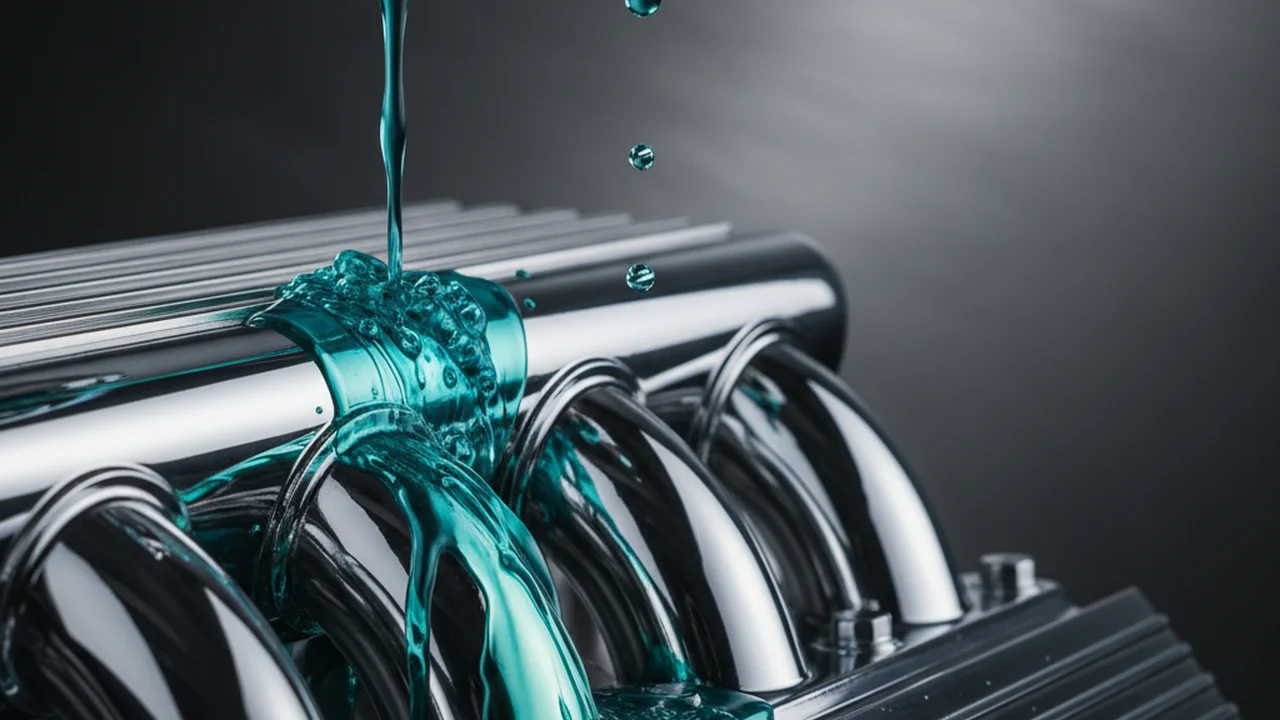
Hey there, car enthusiasts and everyday drivers! Ever wondered what that colorful liquid sloshing around in your car's coolant reservoir actually does? It's called coolant, or antifreeze, and it's a super important player in keeping your engine happy and healthy. Think of it as your engine's personal thermostat, working hard to prevent it from getting too hot in the scorching summer sun or freezing solid during a chilly winter night. Without the right coolant, your engine could face some serious, and expensive, problems. So, let's dive deep into the world of coolants, figure out what makes them tick, and help you pick the best one for your ride, whether you're cruising the highways of the US or navigating the tropical heat of Southeast Asia.
Why Coolant is Your Engine's Best Friend
Before we get into the nitty-gritty of different types, let's quickly chat about why coolant is an absolute must-have. Your engine generates a ton of heat when it's running. If that heat isn't managed, parts can warp, seals can fail, and you're looking at a major breakdown. Coolant's primary job is to absorb this excess heat and carry it away to the radiator, where it can be dissipated into the air. But that's not all! Coolant also has a much lower freezing point than water, preventing your engine block from cracking in cold weather. Plus, modern coolants contain additives that protect your cooling system's metal components from rust and corrosion. It's a multi-tasking marvel!
Understanding Coolant Colors and Technologies
You've probably noticed that coolant comes in a rainbow of colors: green, orange, pink, blue, yellow, even purple! Does the color really matter? Well, yes and no. The color is often just a dye added by the manufacturer to help identify their specific product and make leaks easier to spot. However, the real difference lies in the chemical technology used. The main types you'll encounter are:
- Conventional (Silicate-Based) Coolant: This is the older, traditional type, often green. It works by forming a protective layer on metal surfaces. It's generally less expensive but doesn't last as long and can be harder on seals and gaskets over time.
- Hybrid Organic Acid Technology (HOAT) Coolant: Often orange or yellow. These combine silicates with organic acids for longer-lasting protection and are compatible with more materials.
- Advanced Organic Acid Technology (OAT) Coolant: Typically orange, red, or pink. These use organic acids to protect metal surfaces and offer extended service intervals, meaning you don't have to change them as often. They are phosphate-free and silicate-free.
- Long Life (LLC) Coolant: This is a broad category that often overlaps with OAT and HOAT, emphasizing extended drain intervals.
It's super important not to mix different types of coolants unless the manufacturer explicitly states they are compatible. Mixing can lead to chemical reactions that reduce the coolant's effectiveness, cause corrosion, and even clog your cooling system.
Top 5 Best Coolant Types for Engine Protection
Alright, let's get down to business and look at some of the top contenders for keeping your engine cool and protected. We'll consider factors like protection level, lifespan, compatibility, and availability in both the US and Southeast Asian markets.
1. Prestone All Season Antifreeze/Coolant (50/50 Prediluted)
Product Description: Prestone is a household name in automotive care, and their All Season Antifreeze/Coolant is a popular choice for a reason. This is a HOAT formula, meaning it offers a good balance of protection and longevity. It's pre-diluted to a 50/50 mix with water, which is the optimal ratio for most vehicles, providing freeze protection down to -34°F (-37°C) and boil-over protection up to 265°F (129°C) when the system is sealed.
Use Cases: Ideal for everyday drivers in a wide range of climates, from the moderate temperatures of many US states to the humid heat of Southeast Asia. It's designed to work in both gasoline and diesel engines and is compatible with most vehicles on the road today.
Comparison: Compared to conventional green coolants, Prestone's HOAT formula offers better long-term corrosion protection and a longer service life (typically up to 5 years or 100,000 miles). It's a reliable, no-fuss option that's widely available.
Price Range: Typically ranges from $15 to $25 USD for a gallon of the 50/50 pre-diluted version. Concentrated versions are also available for slightly less per gallon if you plan to mix it yourself.
2. Peak Original Equipment Technology (OET) Antifreeze/Coolant
Product Description: Peak OET coolants are formulated to meet the specific requirements of various vehicle manufacturers. They often use an OAT or advanced HOAT technology, providing excellent protection against extreme temperatures and corrosion. Like Prestone, they offer robust freeze and boil-over protection. Peak offers different formulations for different vehicle types (e.g., Asian vehicles, European vehicles), so it's important to choose the one that matches your car's make.
Use Cases: Excellent for drivers who want to stick to the exact specifications recommended by their car manufacturer. Suitable for both hot and cold climates, offering reliable performance year-round.
Comparison: Peak OET often boasts longer service intervals than conventional coolants, sometimes up to 150,000 miles or 5 years, depending on the specific formulation. Its advantage lies in its precise formulation for specific OEM requirements, potentially offering superior compatibility and protection for certain makes.
Price Range: Similar to Prestone, expect to pay around $15 to $25 USD for a gallon of 50/50 pre-diluted coolant. Concentrated versions are also available.
3. Zerex Original Green Conventional Antifreeze/Coolant
Product Description: If your older vehicle specifically calls for traditional green coolant, Zerex offers a reliable conventional formula. This silicate-based coolant provides basic freeze and boil-over protection and is designed to be compatible with older cooling system materials. It typically needs to be changed more frequently than HOAT or OAT coolants.
Use Cases: Best suited for older vehicles (pre-1990s) that were originally filled with green, conventional coolant. It's a budget-friendly option for those who need to maintain the original specifications of their classic or older daily driver.
Comparison: This is your go-to if your manual says "use conventional green coolant." It's less advanced than HOAT or OAT options, offering shorter service intervals (around 2 years or 30,000 miles) and less robust long-term corrosion protection. However, for the right application, it's perfectly adequate and cost-effective.
Price Range: Generally the most affordable option, often found for $10 to $18 USD per gallon for the 50/50 pre-diluted version.
4. Valvoline Zerex Asian Vehicle Antifreeze/Coolant (Red/Orange)
Product Description: Many Asian automakers (like Toyota, Honda, Nissan) use specific coolant formulations, often a shade of red or orange, that are phosphate- and silicate-free. Valvoline's Zerex Asian Vehicle formula is designed to meet these specific OEM requirements. It uses advanced OAT technology for extended life and superior protection against corrosion and scale buildup, crucial for the complex cooling systems found in many Asian vehicles.
Use Cases: Absolutely essential if you own a vehicle from a Japanese or Korean manufacturer that specifies this type of coolant. It provides excellent protection in both extreme heat and cold, making it suitable for the diverse climates found across the US and the consistently hot and humid conditions in Southeast Asia.
Comparison: Using the correct coolant for Asian vehicles is critical. This Zerex formula offers longer service intervals (often 5 years or 150,000 miles) and better protection against the specific types of corrosion that can affect Asian vehicle cooling systems compared to generic coolants.
Price Range: Typically priced between $18 to $28 USD per gallon for the 50/50 pre-diluted version. Concentrated versions are also available.
5. Havoline Extended Life Antifreeze/Coolant (Yellow/Gold)
Product Description: Havoline's Extended Life formula is another example of advanced OAT or HOAT technology, often appearing yellow or gold. It's designed for extended service intervals, providing robust protection against extreme temperatures and corrosion for up to 5 years or 150,000 miles. It's formulated to be compatible with a wide range of vehicles, including many American and European models that specify extended life coolants.
Use Cases: A great choice for modern vehicles that require long-life coolant. It offers excellent protection in both hot and cold weather, making it a versatile option for drivers in the US and Southeast Asia who want a low-maintenance, high-performance coolant.
Comparison: This coolant stands out for its extended service life and comprehensive protection. It's a step up from conventional coolants, offering better resistance to rust, scale, and electrolysis, which can degrade cooling system components over time.
Price Range: Usually falls in the $17 to $27 USD per gallon range for the 50/50 pre-diluted version.
Making the Right Choice for Your Vehicle and Climate
So, how do you pick the absolute best coolant for your car? Here’s a quick checklist:
- Check Your Owner's Manual: This is the golden rule! Your car's manufacturer knows best. Look for the recommended coolant type (color, technology like OAT/HOAT, and specific OEM part numbers).
- Consider Your Climate: If you live in an area with extreme temperatures (very hot or very cold), ensure your coolant provides adequate freeze and boil-over protection. For Southeast Asia's consistently high temperatures and humidity, robust boil-over protection and corrosion resistance are key.
- Don't Mix and Match: Seriously, don't do it unless the product explicitly says it's safe to mix with other types. Stick to one type or flush the system completely before switching.
- Pre-diluted vs. Concentrated: Pre-diluted (usually 50/50 with deionized water) is convenient and ensures the correct ratio. Concentrated coolant is cheaper per volume but requires you to add distilled or deionized water yourself. Never use tap water, as its minerals can cause scale buildup.
When to Change Your Coolant
Even the best coolants don't last forever. Follow your owner's manual's recommendations for coolant change intervals. Generally:
- Conventional green coolants: Every 2 years or 30,000 miles.
- HOAT and OAT coolants: Every 5 years or 100,000-150,000 miles.
If you notice the coolant looks dirty, rusty, or sludgy, it's time for a change, regardless of the mileage or time elapsed. Also, keep an eye on the coolant level in your reservoir. Low coolant can indicate a leak, which needs immediate attention.
Keeping your engine's cooling system in top shape with the right coolant is one of the simplest yet most effective ways to ensure your vehicle runs smoothly and reliably, no matter where your adventures take you. Happy driving!