Best Brake Hoses for Performance 6 Options
Improve your braking responsiveness with our guide to 6 of the best brake hoses for performance applications. Learn about materials, installation, and benefits.
Best Brake Hoses for Performance 6 Options
meta description: Improve your braking responsiveness with our guide to 6 of the best brake hoses for performance applications. Learn about materials, installation, and benefits.
Hey there, car enthusiasts! If you're looking to seriously upgrade your vehicle's stopping power, you've come to the right place. We're diving deep into the world of brake hoses, those unsung heroes of your braking system. While they might seem like simple rubber tubes, the right brake hoses can make a world of difference in how your car feels and performs, especially when you're pushing it hard. We're talking about sharper braking, better pedal feel, and ultimately, more confidence behind the wheel. So, let's get into it and explore some of the best options out there for you!
Why Upgrading Your Brake Hoses Matters for Performance
Before we jump into specific recommendations, let's chat about why upgrading your stock rubber brake hoses is such a smart move for anyone serious about performance. Your car's original brake hoses are typically made of rubber. Now, rubber is great for a lot of things, but under the intense heat and pressure generated during hard braking, it can expand. Think about it: when you stomp on the brake pedal, you're forcing brake fluid through these hoses to push the brake pads against the rotors. If the hose itself is expanding, that energy is being lost, and you're not getting the full force transferred to your brakes. This leads to a spongy brake pedal feel, reduced stopping power, and less precise control. It's like trying to drink through a straw that keeps collapsing – frustrating and ineffective!
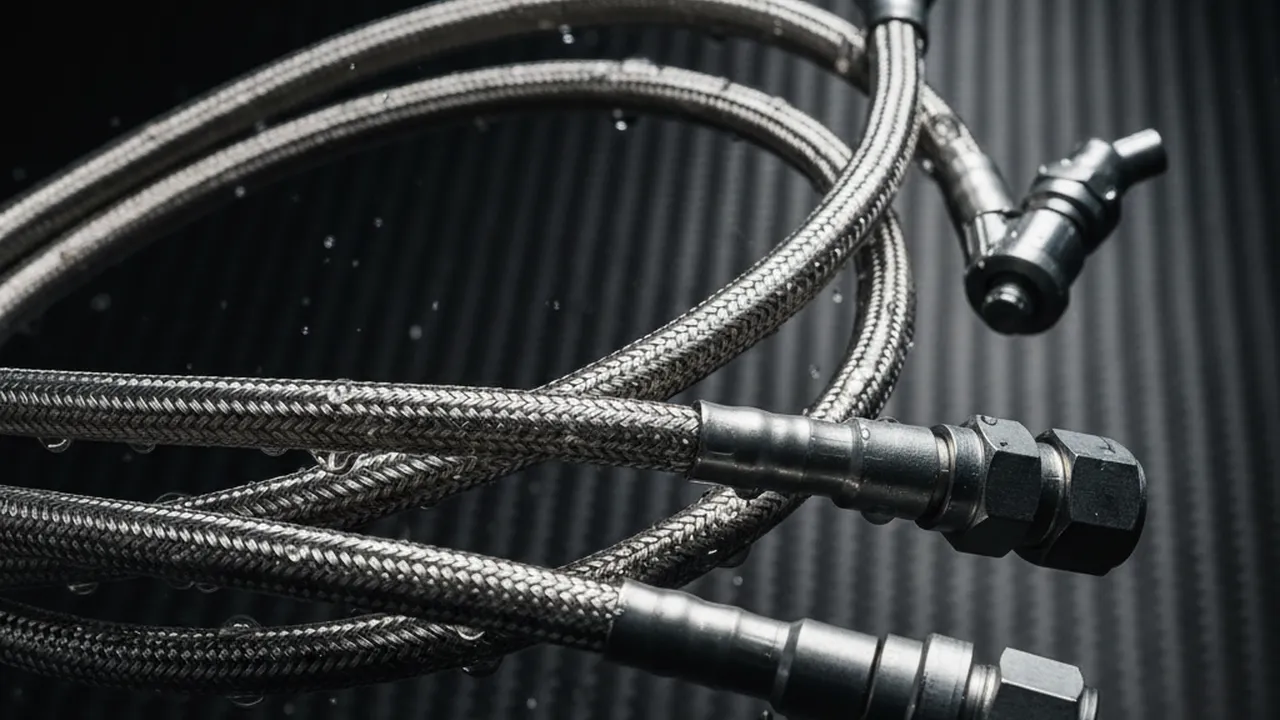
Performance brake hoses, on the other hand, are usually made from different materials that resist expansion much better. The most common upgrade is to stainless steel braided brake hoses. These hoses have an inner liner (often PTFE or Teflon) that handles the brake fluid, and then they're wrapped in a layer of braided stainless steel. This stainless steel braiding acts like a reinforcement, preventing the hose from expanding under pressure. The result? A firmer, more responsive brake pedal, better modulation, and a more direct connection between your foot and your brakes. This is crucial for track days, spirited driving, or even just for everyday driving where you want that extra bit of confidence.
Key Factors When Choosing Performance Brake Hoses
Alright, so you're convinced that upgrading is the way to go. But what should you be looking for when you're shopping around? Here are some crucial factors to consider:
Material Matters: Rubber vs. Stainless Steel Braided
We've touched on this, but it's worth reiterating. While rubber hoses are standard, they are the weakest link in a performance braking system. Stainless steel braided hoses are the go-to upgrade for a reason. They offer superior durability, resistance to expansion, and protection against road debris and abrasion. Some high-end applications might even use more exotic materials, but for most performance street and track cars, stainless steel braided is the sweet spot.
Hose Construction and Quality
Not all stainless steel braided hoses are created equal. Look for hoses with a high-quality inner liner, typically PTFE (Teflon), which is resistant to all brake fluids and high temperatures. The stainless steel braiding should be tightly woven and securely attached. Check for certifications like DOT (Department of Transportation) approval, which ensures they meet safety standards for street use in the US. Good manufacturers will also have robust crimping and fitting processes to ensure a leak-free and durable connection.
Fittings and Adapters
The fittings are the ends of the hoses that connect to your brake system components (like the caliper and the hard line). These are usually made of steel or stainless steel. Stainless steel fittings offer better corrosion resistance, which is a big plus, especially if you live in an area with harsh winters or salty roads. Ensure the fittings are the correct type and thread pitch for your specific vehicle. Many kits come with the necessary fittings pre-installed, but it's always good to double-check.
Length and Routing
This is super important, especially if you've modified your suspension or are running larger wheels. You need brake hoses that are the correct length to allow for full suspension travel without being stretched taut or kinked. If the hoses are too short, they can be damaged during suspension compression or when turning. If they're too long, they can snag on things or get damaged. Many manufacturers offer hoses in various lengths or custom lengths. Proper routing is also key to prevent rubbing against other components, which can cause wear and potential failure.
Vehicle Specificity
Always, always, always ensure the brake hoses you purchase are designed for your specific year, make, and model of vehicle. While some components might be universal, brake hose lengths and fitting types are highly vehicle-specific. Buying a kit designed for your car will save you a lot of headaches and ensure a proper fit and function.
Our Top 6 Picks for Performance Brake Hoses
Now for the exciting part! We've scoured the market and talked to enthusiasts to bring you six of the best performance brake hose options available. These are known for their quality, performance, and reliability. Prices can vary based on your vehicle and the specific kit, but we'll give you a general idea.
1. Goodridge Stainless Steel Braided Brake Lines
Goodridge is a name that's synonymous with high-performance fluid transfer systems, and their brake lines are top-notch. They use a PTFE inner liner and a braided stainless steel outer layer. Their "G-Stop" line is specifically designed for street performance and offers excellent resistance to expansion and abrasion. They often come with a choice of colored outer coatings (like red, blue, or black) for a custom look, and their fittings are typically zinc-plated steel or stainless steel.
- Pros: Excellent reputation, high-quality materials, good resistance to expansion, available in various colors, DOT approved.
- Cons: Can be on the pricier side.
- Typical Use Case: Daily drivers looking for a significant upgrade in pedal feel, weekend track cars, spirited driving enthusiasts.
- Estimated Price Range: $100 - $300 for a full set (depending on vehicle).
2. StopTech Stainless Steel Braided Brake Lines
StopTech is another major player in the performance braking world. Their stainless steel braided brake lines are engineered to provide a firmer pedal feel and improved braking response. They feature a PTFE inner hose with a braided stainless steel outer cover. StopTech is known for its rigorous testing and quality control, ensuring consistent performance. Their fittings are typically stainless steel for maximum corrosion resistance.
- Pros: Renowned performance brand, durable stainless steel construction, excellent pedal feel, corrosion-resistant fittings.
- Cons: Generally a premium price point.
- Typical Use Case: Performance street cars, autocross competitors, drivers who demand precision.
- Estimated Price Range: $120 - $350 for a full set.
3. EBC Brakes Stainless Steel Braided Hoses
EBC Brakes is well-known for its brake pads and rotors, but their brake hoses are also a solid choice. They offer stainless steel braided hoses designed to improve brake pedal feel and reduce fade. EBC's hoses typically feature a high-quality inner liner and a robust stainless steel braid. They are often available as direct-fit kits for many popular vehicles.
- Pros: Reputable brake manufacturer, good value for the performance, durable construction, designed for improved pedal feel.
- Cons: May not offer as many color options as some competitors.
- Typical Use Case: Enthusiasts looking for a reliable upgrade from stock, performance street applications.
- Estimated Price Range: $90 - $250 for a full set.
4. HEL Performance Stainless Steel Braided Brake Lines
HEL Performance is a UK-based company that has gained a strong international following for its high-quality brake lines. They offer a vast range of colors for both the hose coating and the fittings, allowing for a truly custom look. Their hoses are constructed with a PTFE inner hose and a braided stainless steel outer layer, providing excellent performance and durability. They are often available in custom lengths.
- Pros: Huge range of color options, high-quality construction, excellent performance, often available for custom applications.
- Cons: Can be more expensive, especially for custom orders.
- Typical Use Case: Show cars, custom builds, performance street and track cars where aesthetics are important.
- Estimated Price Range: $150 - $400+ for a full set, depending on customization.
5. Earl's Performance Plumbing Stainless Steel Braided Hoses
Earl's is a long-standing name in the automotive aftermarket, particularly known for its plumbing and fluid transfer components. Their stainless steel braided brake hoses are built to last and perform. They offer various types of hoses, including their popular "Insta-Crimp" and "Auto-Fit" lines, which provide flexibility in installation. They use high-quality inner liners and durable stainless steel braiding.
- Pros: Established brand, durable and reliable, good range of product types, often competitively priced.
- Cons: Some of their older fitting styles might not be as aesthetically pleasing as newer options.
- Typical Use Case: Custom builds, hot rods, muscle cars, and general performance upgrades.
- Estimated Price Range: $80 - $220 for a full set.
6. Russell Stainless Steel Braided Brake Lines
Russell is another well-respected brand in the performance automotive industry, offering a wide array of fluid transfer products. Their stainless steel braided brake lines are designed to deliver consistent braking performance and a firm pedal feel. They utilize a PTFE inner hose and a braided stainless steel outer cover, ensuring durability and resistance to expansion. Russell often provides kits with specific fittings for easy installation.
- Pros: Trusted brand, good performance and durability, often includes vehicle-specific fittings.
- Cons: Price can be in the mid-to-high range.
- Typical Use Case: Performance street cars, trucks, and SUVs looking for improved braking response.
- Estimated Price Range: $110 - $300 for a full set.
Installation Considerations for Your New Brake Hoses
So, you've picked out your shiny new brake hoses. What's next? Installation! While it's definitely a job you can tackle yourself if you're mechanically inclined, there are a few things to keep in mind. First and foremost, brake work is safety-critical. If you're not comfortable with it, it's always best to have a professional mechanic install them. They have the right tools and experience to ensure everything is done correctly.
If you are doing it yourself, you'll need some basic tools, including wrenches, a flare nut wrench (highly recommended to avoid rounding off fittings), a brake fluid catch bottle, and of course, new brake fluid. You'll also need a way to bleed your brakes afterward to remove any air from the system. Air in the brake lines is just as bad as an expanding hose – it makes your pedal feel mushy!
When installing, pay close attention to the routing of the new hoses. Make sure they have enough slack to accommodate suspension movement and steering without being stressed. Secure them properly using any provided brackets or zip ties to prevent them from rubbing against moving parts or the chassis. And remember, always use fresh, high-quality brake fluid that meets your vehicle manufacturer's specifications (DOT 3, DOT 4, etc.).
When Should You Replace Your Brake Hoses?
Even if you're not going for a full performance upgrade, there are times when replacing your brake hoses is a necessity. Rubber hoses degrade over time due to exposure to heat, ozone, and road grime. Look for signs of wear like:
- Cracks or splits in the rubber.
- Bulging or swelling of the hose, especially under braking pressure.
- Leaking brake fluid around the hose or fittings.
- A spongy or soft brake pedal that wasn't there before.
If you notice any of these signs, it's time for a replacement. It's often recommended to replace all four brake hoses at once, along with flushing and replacing your brake fluid, to ensure consistent performance and safety across your entire braking system.
Upgrading your brake hoses is one of the most cost-effective ways to significantly improve your vehicle's braking performance and feel. Whether you're hitting the track or just want that extra confidence on your daily commute, a good set of stainless steel braided brake hoses is a worthwhile investment. Happy braking!